
Mantashe Grabs Big Slice in IRP Energy Plans
- DMRE’s heavy hand in oil & gas
- Has Mantashe gone over the top with Parliament once again?
One factor has become totally evident from the progress of the Integrated Resource Plan (IRP) energy plans – being conducted at high speed through Parliament at the moment – is that the Department of Mineral Resources and Energy (DMRE) is quite incapable of 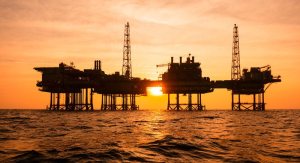 engaging in a two-way conversation with business and industry.
Whilst a good deal of the debate in Parliament will centre on forward thinking on power stations; renewables; to what extent coal remains in the future mix; re-building of the grid, hydro et al, what has been remarkable about the DMRE draft is the extent oil and gas has been brought to forefront.
Plan for future
The IRP is intended as a forward-thinking document, which has taken the DMRE and the Minister of Energy four years to overhaul and update. It serves as the government’s strategic framework for planning South Africa’s energy supply in the coming years. Such a task is complicated by the transition to a carbon-neutral energy mix, coupled with an aging coal fleet, grid capacity constraints, and problems surrounding the intermittency of renewable energy sources.
While energy is the overall subject, electricity is the subject matter, particularly its supply into the future. Accordingly, the IRP was finally presented to Parliament by the Minister of Electricity, Kgosientsho Ramokgopa, with Minister Gwede Mantashe playing a significant role but in the background.
Big increase
What was most notable about Minister Ramokgopa’s presentation, and which has now emerged as a major query, is on the extent of an unexpected 10% scaling-up of gas to power (GTP) inputs as compared with the 2019 IRP. This, say experts, is at the expense of wind, solar and renewables, all coming at a time when South Africa has committed itself to a reduction of carbon-based inputs.
Furthermore, there were no indications on how such an increases would be accommodated by GTP infrastructure, of which there is basically nothing in working order at the present moment.
Not supported
Queries have also arisen in hearings before Parliament from industry groups and energy research institutions expressing concern about the apparent lack of homework and justification for the large allocation to GTP initiatives generally. The idea is not popular. Well known experts, Meridian Economics, say “extreme overreliance on gas burn in the IRP 2023, especially in the short term, would put the system at high risk of additional load-shedding”.
As noted by Engineering News, “The net effect is that GTP has secured a large capacity allocation in the plan. Given an assumed utilization rate of over 85%, these plants are also poised to provide a far larger share of actual electricity by 2030, crowding out other potentially cheaper and less forex-exposed electrons.”
In another world
This inarticulate approach to strategy and economic planning maybe because the DMRE is far too committed to and deeply involved in unapproved oil and gas developments and as a result, it can only be that guesswork has been applied. Like all oligarchies the world over, the DMRE is all about state control; it is somewhat secretive, has fixed attitudes on policy issues and ultimately everything gets referred to the controller politician at the top. An increase in GTP input is clearly the order of the day which order has come from the top.
With all of South Africa’s oil requirements being imported to produce petroleum products and with demand for these also exceeding production, facts show that this excess in demand is also imported. At the same time, DMRE’s wish to have state or government to government control of the fuel supply chain is self-evident from the Minister’s now probably forgotten attempt to woo the Saudis into either Richards Bay or Coega plus the more recent failed Wild Coast sonic gas exploration venture with Shell, which must still be smarting.
New to the scene
The ANC’s current top favourite for securing South Africa’s future energy supply and to participate in the latest IRP remains a mixture of state-owned gas and gas-to-oil entities, including PetroSA, is now the renamed South African National Petroleum Company (SANPC). The new company has become the owner of the PetroSA’s shutdown Mossgas gas-to-liquids (GTL) plant in Mossel Bay and also, it has to be assumed, has also acquired the major encumbrance in the PetroSA books of R14.5bn, all as a result of the failed attempt to reopen offshore drilling in Outeniqua Basin to supply feedstock to Mossgas.
It is consequently difficult to understand, therefore, the well reported fact that Russia’s Gazprombank has answered DMRE’s tender call by providing R3.7 billion in a programme for SANPC/PetroSA and somebody to refurbish the gas-to-liquids refinery in Mossel Bay and a further contract amounting to R22 billion to restore drilling in the Basin. On this, more highly politicized trouble for the DMRE war room arose after it was pointed that Gazprombank has major role as a conduit for Russia to purchase military material for its war effort against Ukraine. This has irritated the US Foreign Affairs Dept intensely and President Ramaphosa is being called upon to douse the fire.
In deep water
If this was the end of Minister Mantashe’s fight to be a major contributor to the 2024 IRP, that is not the case it seems. Amubughane is now reporting through Daily Maverick that the DMRE is running into all kinds of snarl-ups and queries undermining a multibillion rand contract, which must have been drawn up by DMRE, for deep water drilling in the dangerous waters of Bralpudda Block, off Prince Edward Island and abandoned by Total Exploration late in 2023.
Added to this, and without claiming any forecasting wizardry, there must be even further delays to come in approval of the 2024 IRP since, whilst the basic outline seems to gain overall parliamentary acceptance, it is DMRE who again have put the spanner in the works by including the Karpowership concept as a GTP contributor in the plan – a move which beggars belief.
It was Minister Kgosientsho Ramokgopa who announced to Parliament some three months ago at the medium term budget that Karpowership was “dead in the water”
Patrick McLaughlin
editor